
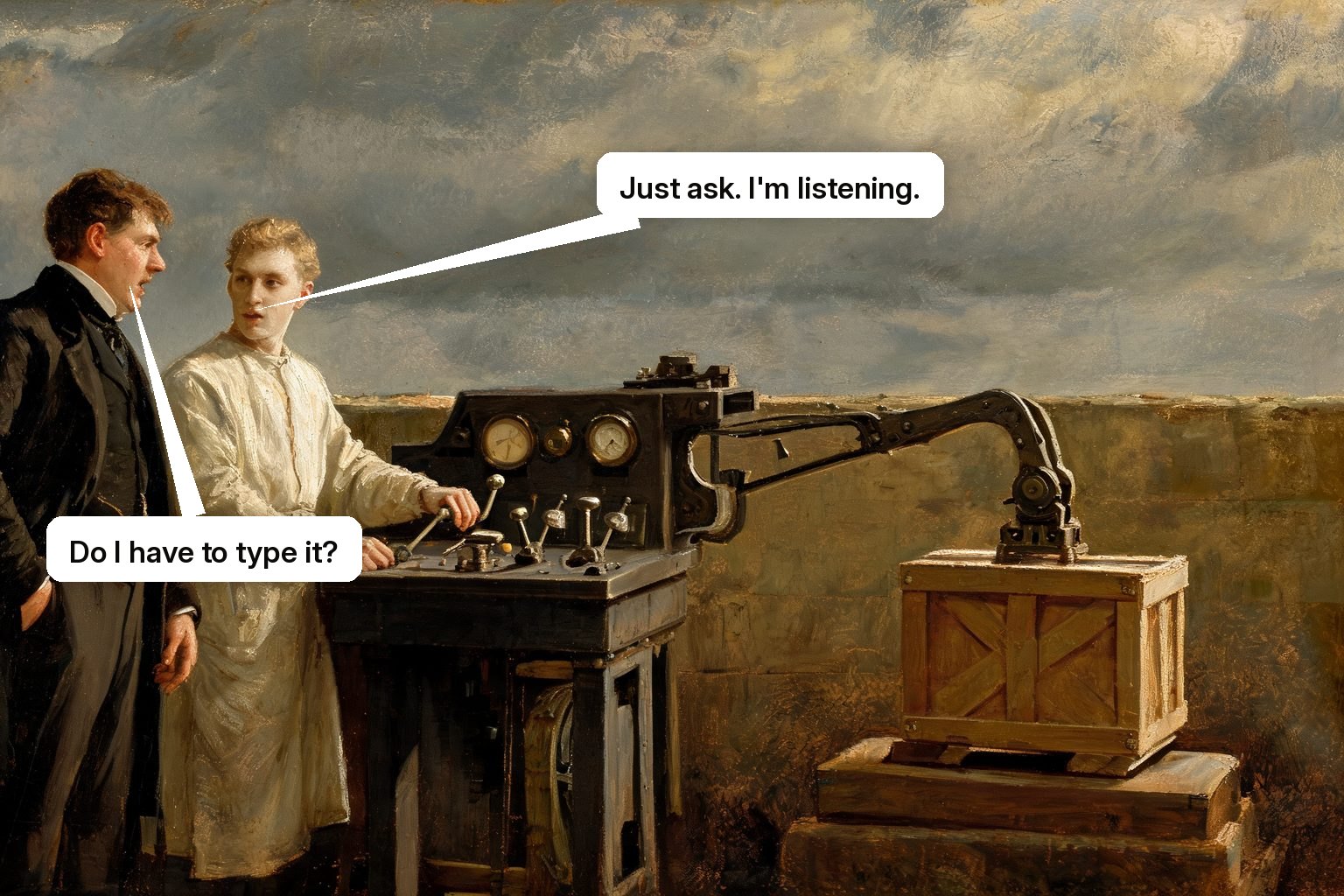
Voice AI agents hold real-time spoken conversations with your users, interruptible, multilingual, fast enough to feel like dialogue rather than dictation. For SaaS, voice matters most where bandwidth and presence decide outcomes: demos, onboarding, support, and training. The 2026 lesson is blunter, though: voice alone is half an agent, and the winners pair it with eyes and hands.
Why voice, and why now?
Two properties make voice more than a novelty interface. Bandwidth: people explain situations several times faster by talking than typing, and the exchanges where SaaS value concentrates, a buyer's objections, a stuck user's confusion, a trainee's questions, are exactly the high-back-and-forth kind. Presence: a voice is a participant in a way a text box never is; it can join the kickoff call, hold attention through a walkthrough, and make an interaction feel attended rather than processed. Real-time speech models crossed the latency threshold where interruption works, and interruption is the whole game, a voice you can't cut off is narration, not conversation.
Where voice earns its place in SaaS
By lifecycle stage. Demos: high-intent visitors carry questions faster than they'll type them, and voice carries qualification naturally inside the conversation. Onboarding: setup is a dialogue, what are you trying to do, what's this field, why this option, and new users are the least equipped to type accurate descriptions of their confusion. Support: users talk through hard problems faster than they can write them, and tone carries diagnostic signal text drops. Training: questions in the moment, spoken while hands stay on the workflow. Across all four: multilingual voice, switchable mid-conversation, quietly removes a friction that English-only funnels never measure.
The half-agent trap
The 2026 field is full of voice agents that inherited chat's blindness: they hear the user but can't see the screen or touch the product, a phone call from someone who's never used your app. Voice describing what it cannot see reproduces the oldest support failure at higher fidelity. The design bar for SaaS is voice plus eyes plus hands: the agent that says "I can see the webhook config, let's fix it together" rather than "can you tell me what the settings page shows?" Evaluate any voice agent by what it can perceive and do, not by how natural it sounds, naturalness is table stakes now; capability is the differentiator.
Practical evaluation notes
Test interruption relentlessly; test silence tolerance (users think, scroll, read, an agent that fills every pause performs anxiety); test push-to-talk and text fallback, because open-plan offices are real; test language switching mid-sentence if your market mixes languages. Then test the other half: does the voice see the screen it's discussing, and can it act? (Disclosure: voice in ten languages, paired with eyes and hands, is how Skippr's agents work; the voice-alone-is-half-an-agent warning is the guide's honest core either way.)
Questions buyers actually ask
Do SaaS users actually talk to voice agents?
High-intent and stuck users do, once the first exchange proves it listens; skimmers type. Offer both paths and let the moment choose.
What latency is acceptable?
Low enough that interruption feels natural. If users wait out the agent's sentences, it's narration, and they'll disengage.
Is voice worth it for simple products?
The simpler the product, the more voice's value shifts from explanation to qualification, booking, and presence, still real, differently shaped.
See what a live agent actually does
The category is easier to watch than to define. Fifteen minutes is enough to see where the mechanism differs from everything it gets confused with.