
A chatbot answers typed questions from a knowledge base; a live AI agent talks with users in real time, sees their screen, takes actions in the product, and works sessions with an agenda. They're adjacent technologies separated by a structural gap, what each can perceive and do, not by how recently they were built.
What chatbots do well, honestly
Chat deserves respect before comparison: modern LLM-powered chatbots answer a large share of documented questions instantly, at scale, in many languages, and they taught the industry that customers will engage with automated help at all. For knowledge-shaped problems, "what does this plan include," "how do I reset a password", chat is fast, cheap, and fine. Chat was the right first step. It also has a structural ceiling, and the ceiling, not the intelligence, is the comparison's real subject.
Where the ceiling sits: blind and stateless
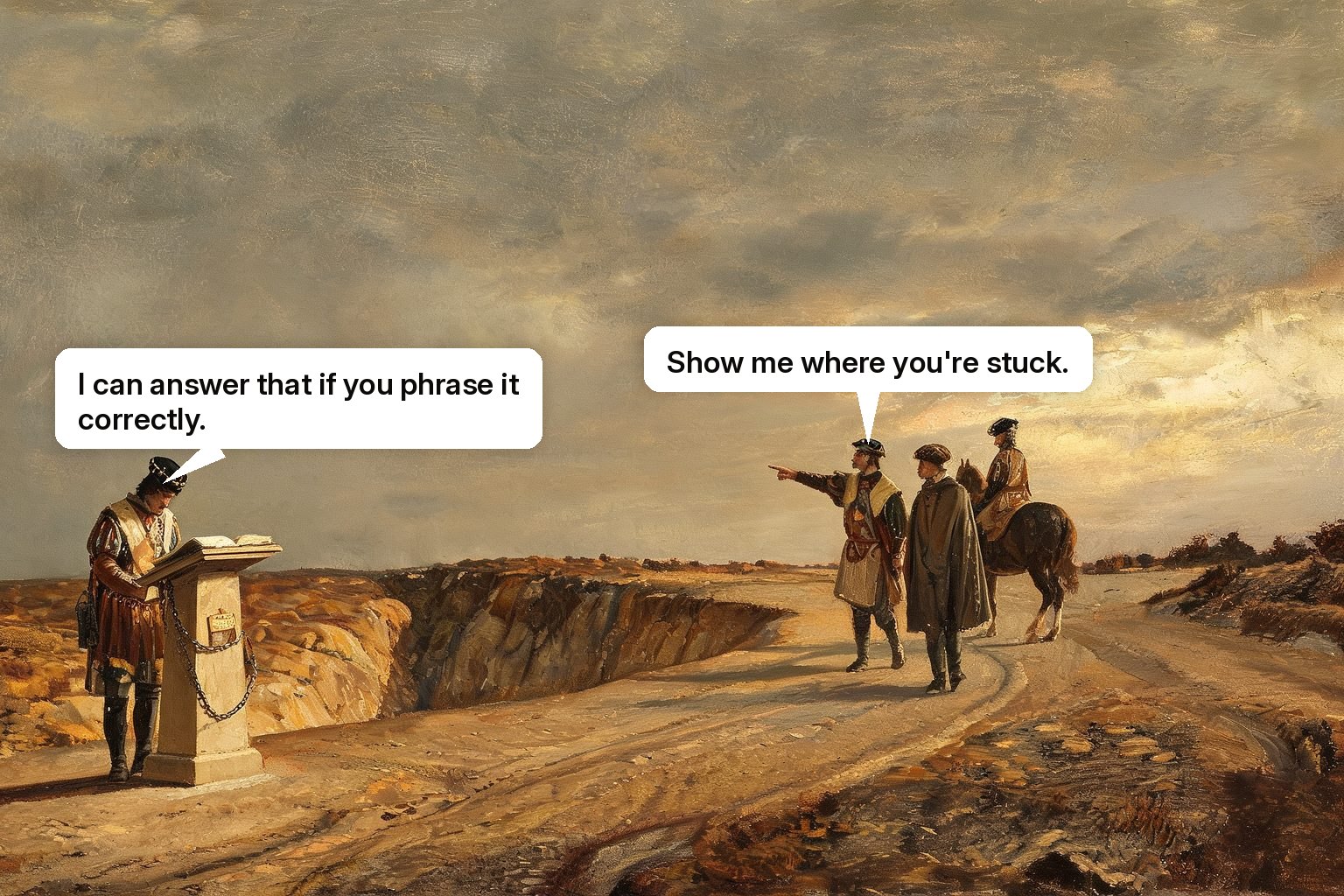
Two constraints define chat's limits. Blindness: the bot cannot see what the user sees, so the user must describe their screen in words, and the bot must guess from the description, which collapses exactly when the user is confused, the moment help was needed most. Statelessness: each exchange is a quick hit; close the window and the context dies, so multi-step jobs, a setup spanning days, an evaluation spanning stakeholders, restart from zero at every visit. Better models sharpen the answers; they don't grow eyes or memory. Those require different capabilities, not more intelligence.
What live agents change, capability by capability
Perception replaces description: the agent sees the actual page, state, and error, so "can you describe what you're seeing?" becomes "I can see it, let's fix it." Action replaces instruction: instead of steps to follow, the agent fills, clicks, and configures with permission, and verifies the result live. Voice replaces typing where bandwidth matters: people explain problems faster by talking, and a voice can join the video call where real evaluations happen. And the session replaces the quick hit: an agenda held across a 45-minute call or four sittings in a week, which is what lets the agent finish jobs, onboard the account, resolve the issue end to end, rather than answer questions about them. Chat answered questions; live finishes jobs.
How to choose, and when you need both
Match mechanism to problem shape. Documented questions at volume: chat-layer economics remain excellent. State-dependent problems, multi-step jobs, and high-stakes conversations (demos, onboarding, technical support, training): the live agent's territory, because knowledge without perception can't touch them. Mature stacks often run both, a knowledge layer for the documented, live agents for the lifecycle work. (Disclosure: we build Skippr's live AI employees, the right side of this comparison, and the honest split above is still the advice we'd give.)
Questions buyers actually ask
Is a live AI agent just a smarter chatbot?
No, the differences are capabilities, not IQ: screen perception, in-product action, voice, and sessions with memory. A smarter chatbot is still blind and stateless.
Will live agents replace chatbots entirely?
For documented Q&A, chat economics stay hard to beat. Live agents take over where chat structurally can't go: state, action, and multi-session work.
Which is right for my support stack?
Count your state-dependent tickets, the ones needing screenshots and screen descriptions. That share is your live-agent case; the documented remainder is chat's.
See what a live agent actually does
The category is easier to watch than to define. Fifteen minutes is enough to see where the mechanism differs from everything it gets confused with.