
An AI agent with hands doesn't just suggest the next step; it performs it: annotating the screen, clicking through flows, filling forms, running configurations, calling APIs. Action is the capability that turns advice into help, and it's also the capability that demands the most deliberate trust design, permissions, boundaries, and reversibility, before anything else.
What "hands" actually means
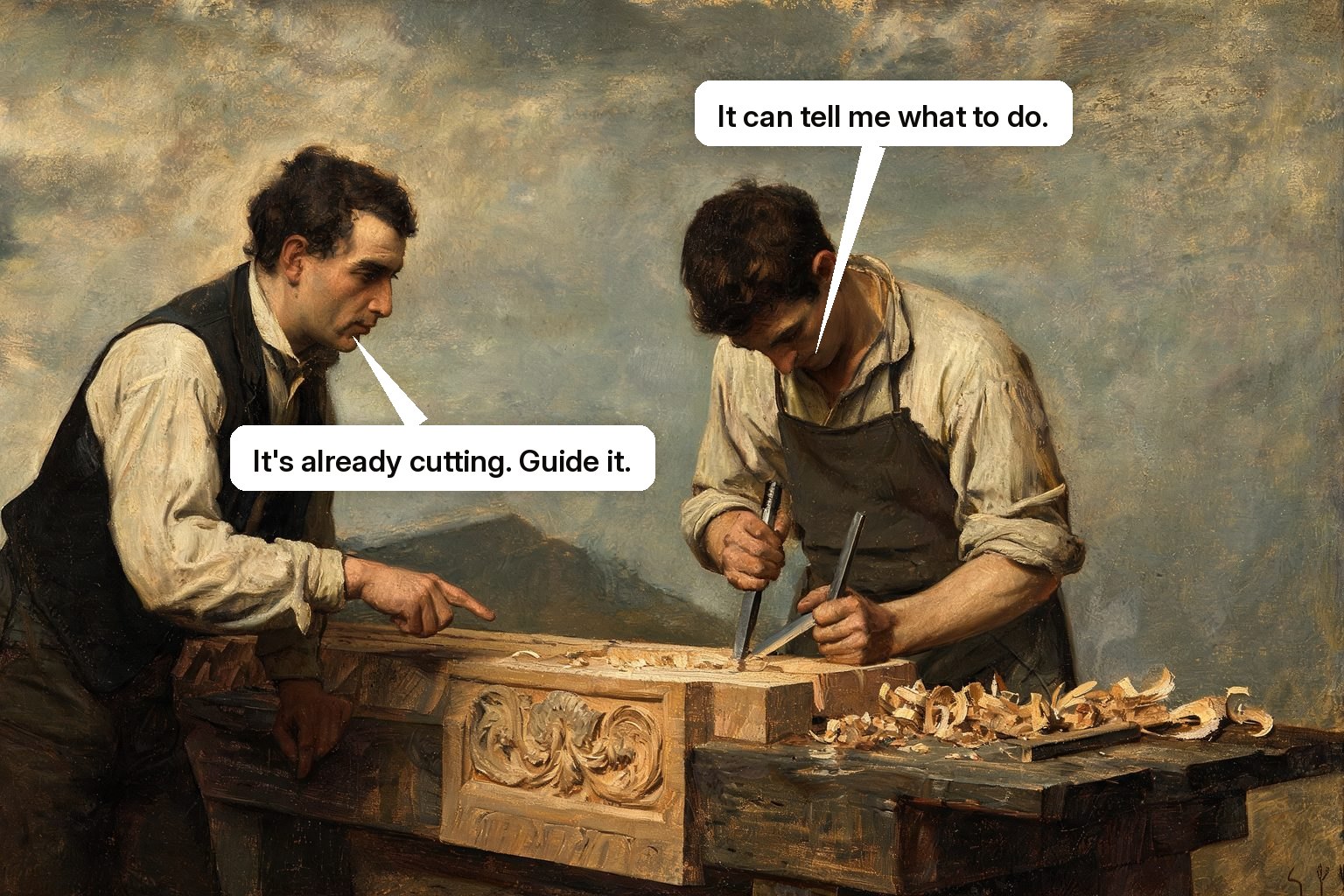
A ladder of action, climbed with permission at each rung. Annotate: highlight the control that matters now, the gentlest action, changing nothing. Guide: drive the cursor's path while the user confirms each step. Perform: fill the form, click the flow, run the setup, narrated as it happens so the user learns from watching their own account get configured. Execute: integration-level work, API calls, backend tasks, the deepest rung, where the agent operates on systems rather than screens. Each rung exists because different moments deserve different depths: the confident user wants a highlight; the overwhelmed one at 11 p.m. wants the thing done, visibly and explainably.
Why action changes everything downstream
Because the translation layer disappears. Advice-only help ends with instructions the user must convert into clicks, and every conversion loses something, time, accuracy, patience. When the helper can act, instruction and outcome become one motion: the integration isn't described, it's connected; the fix isn't mailed as steps, it's applied and verified working. This is where onboarding compresses, support resolves rather than deflects, and training becomes supervised doing. Talk, see, and take action, the third verb is where the value lands.
The permission architecture trust requires
Hands without governance is a non-starter, and rightly so. The controls that make action trustworthy: explicit consent, per session or per action class, with the user always able to watch and interrupt; scoped capability, what the agent may touch is bounded and configurable, per surface, per role, per environment; narration, actions announced as they happen, never silent; reversibility bias, prefer actions that can be undone, confirm the ones that can't; and audit, every action logged, reviewable, attributable. Enterprise deployments add admin-level policy: which agents may act where, on whose accounts, with what approvals. Evaluate any acting agent on this architecture before its capabilities, an agent that can do a lot but can't show you its permission model has its priorities backwards.
Trust is earned in ladders, not launched
Practically, teams widen an agent's action scope the way they'd widen a new hire's: start at annotate-and-guide, review the logs, extend to perform on low-risk surfaces, extend again as the record justifies. The mechanism rewards this: every narrated, logged, reversible action is a small deposit of demonstrated competence. (Disclosure: hands, with consent, narration, and human-in-the-loop escalation by design, are one of the four capabilities Skippr's agents are built from; the trust architecture above is what we'd tell you to demand from anyone, including us.)
Questions buyers actually ask
What should an AI agent never do autonomously?
Irreversible, high-stakes actions, deletions, payments, permission grants, without explicit confirmation, and anything your policy reserves for humans. The list is yours to define; the platform's job is enforcing it.
How do users know what the agent is doing?
Narration and visibility: actions announced as they happen, on-screen, interruptible, with a log afterward. Silent action is disqualifying.
Does action require deep integration work?
Screen-level action typically needs a lightweight embed; API-level execution goes as deep as you choose to wire it. Scope grows with trust, not upfront.
See what a live agent actually does
The category is easier to watch than to define. Fifteen minutes is enough to see where the mechanism differs from everything it gets confused with.