
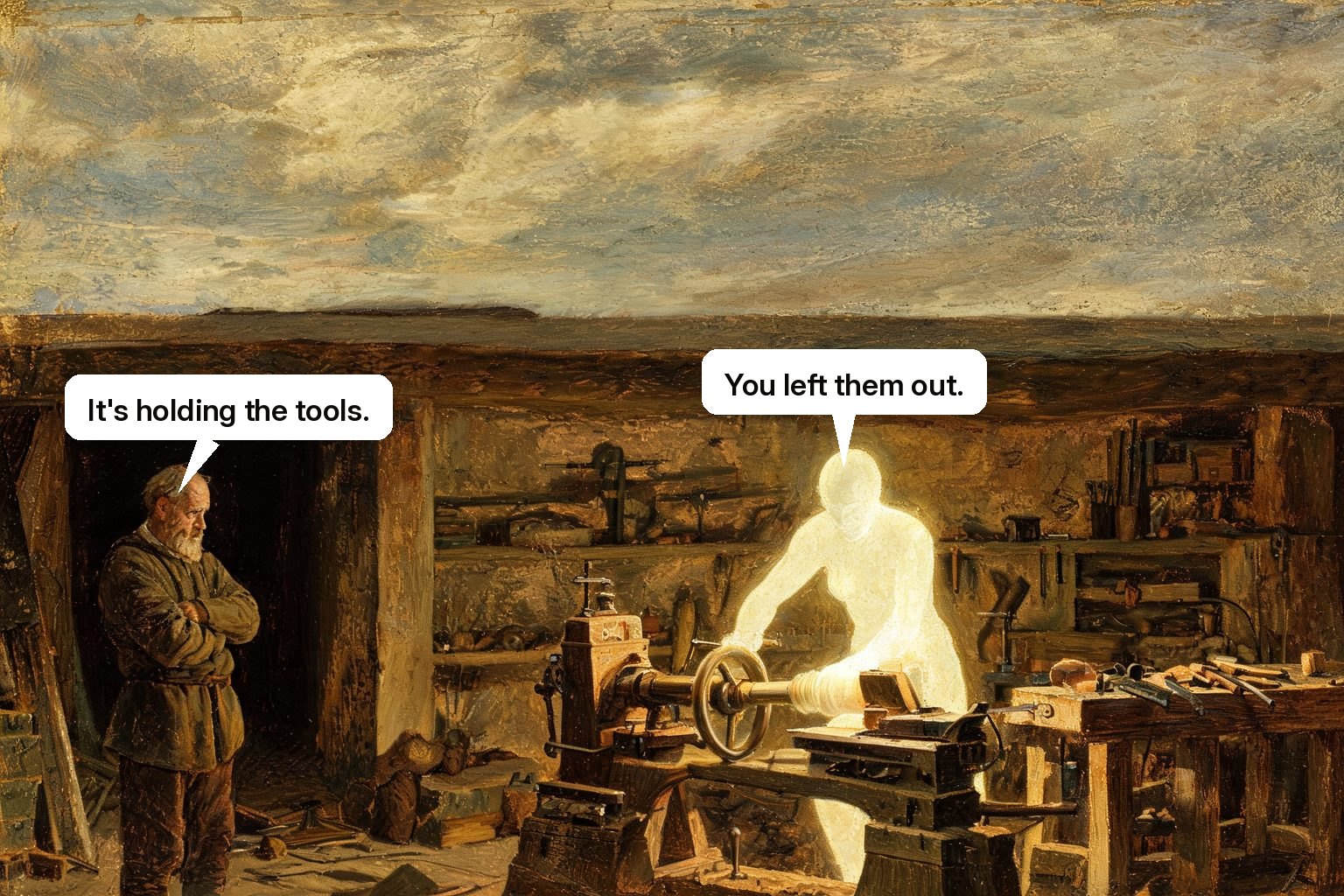
For decades, the deal was fixed: humans use software, software gets used. Between 2024 and 2026 that deal quietly broke, vision models learned to read live interfaces the way users do, and computer-use capabilities let AI click, navigate, and complete flows. AI learned to use software, and every customer-facing category is still absorbing what that means.
The perception half: reading interfaces as situations
The breakthrough wasn't screenshots; it was semantics. Vision models crossed from "there are pixels shaped like a button" to "this is the settings page, the integration is misconfigured, and the user has been circling the same control for a minute", interfaces read as situations, with state and intent, the way an experienced colleague reads them over your shoulder. That mattered doubly because interfaces change weekly: perception that understands meaning survives redesigns that break anything anchored to structure. The oldest constraint in customer AI, the machine cannot see what the user sees, stopped being a law of physics and became an engineering budget.
The action half: from advice to execution
In parallel, computer-use and browser-automation capabilities gave AI hands: clicking, typing, filling forms, chaining steps into completed flows. The industry's proof points stacked up fast, computer-use agents, browser agents, agentic browsers, a wave of enterprise launches in every software category, and analysts began projecting task-specific agents embedded across most enterprise applications within a couple of years. The direction stopped being in dispute. What action changed was the unit of help: advice ends in instructions the user must translate into clicks; execution ends in the thing being done. The translation layer, where time, accuracy, and patience had always leaked, became optional.
Why this wave was different from chat's
Chat automated a conversation about the work; eyes and hands automate participation in it. That's a difference of kind, and it redrew what the hard problems were: not "answer accurately" but "act safely", consent, scope, narration, reversibility, audit. It also arrived as an industry wave, not one lab's trick: the capabilities emerged across the ecosystem, every incumbent began bolting agents onto their form factor, and no honest teller of this story claims to have invented seeing or clicking. The differentiation moved up a level: given that everything can now see and act a little, what form factor uses those organs best?
The question the wave left open
Eyes and hands, bolted onto a quick-hit architecture, produce a gifted intern with amnesia: capable in the moment, gone by the next one. The wave supplied organs; it didn't supply the agenda, the memory, or the team, the things that turn capability into an employee. That synthesis is the next chapter's subject, and the reason this year was a beginning rather than an ending. (Disclosure: we build at that next layer, Skippr's agents stand on this industry wave rather than claiming to be it.)
See what a live agent actually does
The category is easier to watch than to define. Fifteen minutes is enough to see where the mechanism differs from everything it gets confused with.