
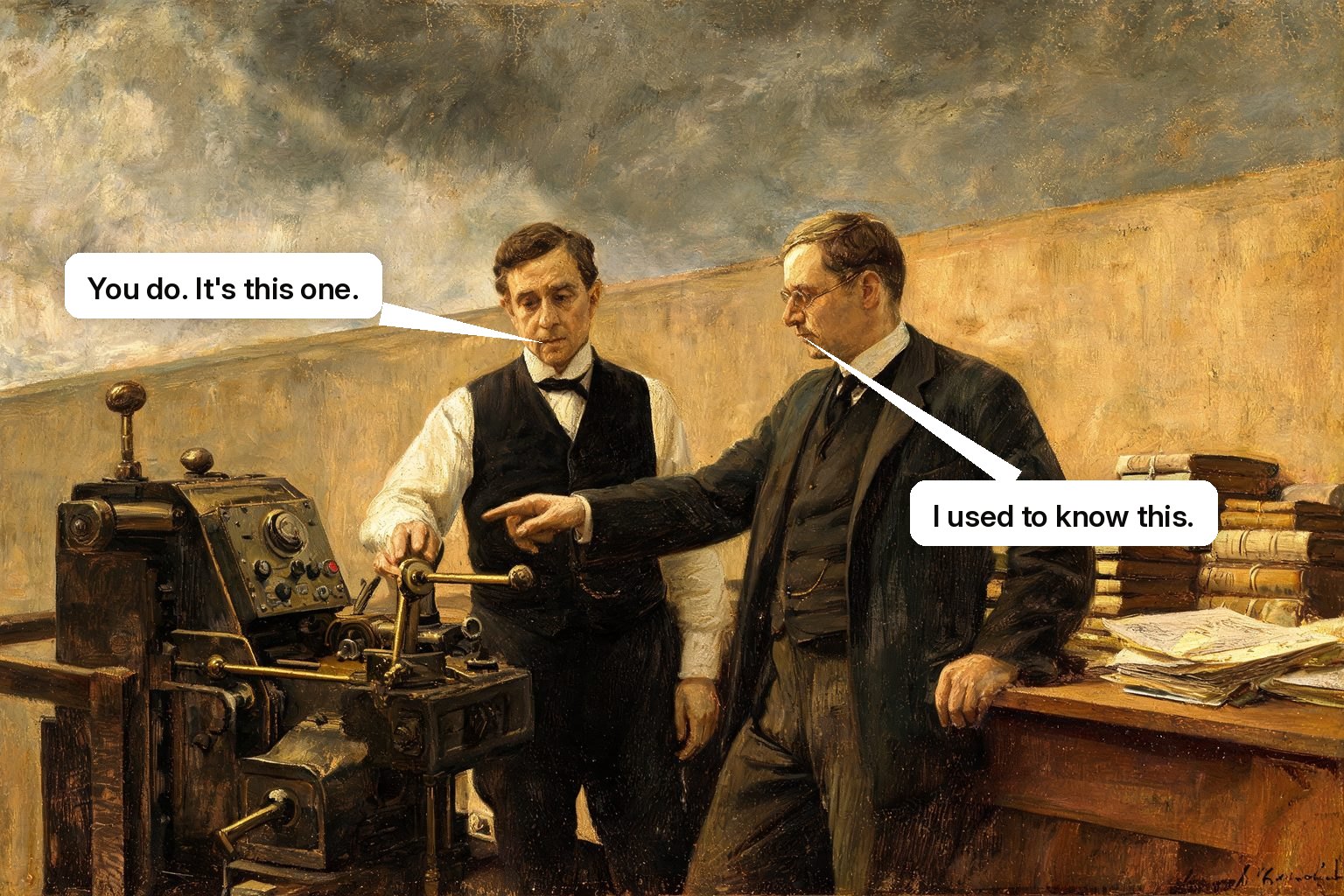
Skills decay on a schedule nobody manages: the workflow trained in January is fumbled by June, not because the training failed but because the skill sat unused. Refresher training is the unbudgeted half of every training program, and it's the half that agent-delivered, decay-aware sessions finally make operational.
Why is decay invisible until it's expensive?
Because nothing watches for it. Training programs measure the moment of learning and then stop; the slow slide from fluent to hesitant to wrong happens off-camera, and surfaces as symptoms with other names: the error rate on month-end close, the process drift the auditor finds, the support tickets from a team that "was trained on this." Procedural skills, exactly the kind software runs on, decay fastest when unused, and every team has workflows that matter enormously but run rarely: the escalation path, the recovery procedure, the quarterly report. Rare-but-critical is the decay sweet spot, and the classic answer, annual retraining for everyone on everything, is too blunt to work and too expensive to do properly.
What does decay-aware refreshing look like?
Targeted, small, and triggered, instead of universal, large, and scheduled. Time triggers: workflows unperformed for N weeks earn a five-minute practice rep before they're needed live, the refresher sized to the decay, not to a course catalog. Event triggers: the seasonal workflow refreshed the week before its season; the recovery procedure drilled before the release that might need it. Observation triggers: an agent that sees the live screen notices hesitation returning, the wrong turn taken on a once-fluent path, and offers the micro-refresher at the moment the decay reveals itself, which is the cheapest possible catch.
Why practice mode is the refresher's natural home
A refresher isn't relearning, it's a rep: one realistic scenario in practice mode, unassisted if possible, corrected where not, sixty seconds of confirmation for the fluent and five minutes of rebuild for the rusty, with the per-learner record updated either way. That record is what turns refreshing from a program into a property: every workflow's last-performed date and last-verified competence, per person, is a decay map your team has never had, and the agenda works it quietly in the background of normal weeks.
What should you measure?
Error rates on refreshed versus unrefreshed rare workflows, incident counts on recovery procedures, and the support tickets whose root cause reads "used to know this." Decay is one of the few training problems with a clean counterfactual, pick two comparable teams, refresh one, and read the difference. (Disclosure: decay-aware agendas and always-on practice mode are how Skippr's training agent handles refreshing; the trigger design applies anywhere.)
Questions buyers actually ask
How often should skills be refreshed?
By trigger, not calendar: rare-critical workflows before they're needed, seasonal ones before the season, and anything an observing agent sees getting hesitant.
Isn't this just spaced repetition?
It's spaced repetition finally applied to procedures at work, with the spacing driven by actual usage data instead of a study schedule.
Do experienced people resent refreshers?
Sixty-second confirmations don't read as remedial, they read as a warm-up. Resentment comes from hour-long recertification of things people do daily; targeting removes it.
Watch it train someone
Completion is not competence, and the difference shows up in the product rather than the dashboard. Fifteen minutes is enough to tell them apart.