
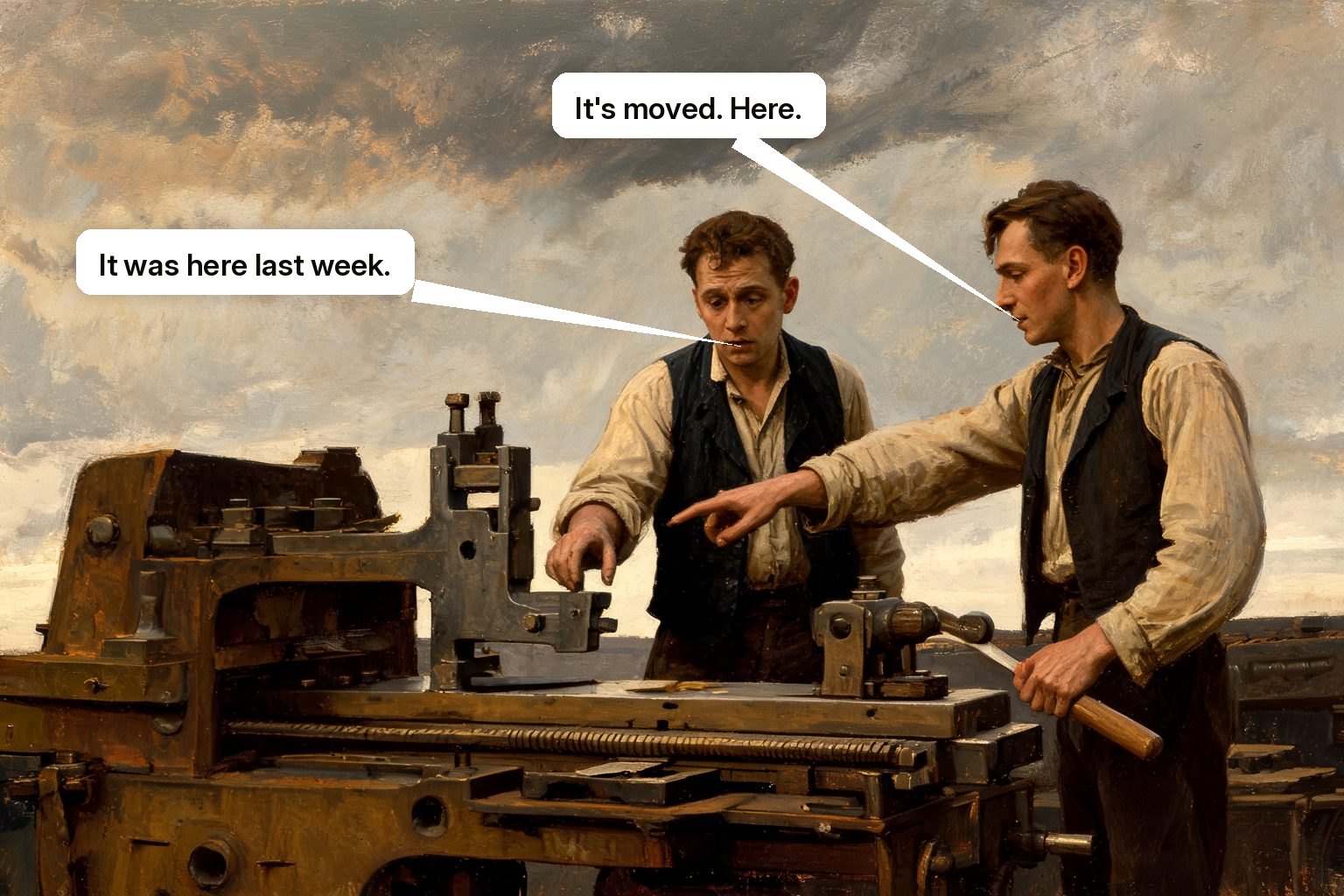
Every redesign quietly un-onboards your existing users: the workflows they knew are somewhere else, the muscle memory is wrong, and the changelog nobody reads is doing the work of a guide nobody has. Re-onboarding treats a major release like what it is, a moment when thousands of proficient users become beginners at specific things, and gives each of them a short, targeted session back to fluency.
Why do redesigns burn trust with your best users?
Because the pain lands hardest on power users: they had the deepest muscle memory, so they lose the most, and they're the ones with the standing to complain loudly. The standard launch kit, an announcement, a tooltip pointing at the new navigation, a webinar, treats a proficiency loss as an awareness problem. Users don't need to be told the redesign happened; they're staring at it. They need their specific workflows re-mapped: where did my thing go, what replaced my shortcut, why does my report look different.
What does AI re-onboarding actually do?
Three things the launch kit can't. It knows what each user actually did: the workflows this person ran weekly are the ones their session covers, not a generic tour of everything that moved. It works on the live screen: "your approval flow now starts here, let's run one together," a five-minute session per user, not a forty-minute webinar for whoever attends. And it's there at the stumble: when a user reaches for the old location, the agent catches the hesitation in the moment and shows the new path, which is exactly when the re-learning sticks. Because the agent perceives the current interface, its own knowledge is already migrated, there's no training content to update before you can retrain users.
How do you run a migration wave?
Sequence by impact. Before release: define the workflow mapping, old path to new path, for the changes that matter, with the reasons ("here's what the new layout gets you") attached. At release: proactive short sessions for the heaviest users of the changed areas first, they're your loudest critics and best amplifiers, then the long tail at their own pace. After release: watch the stumble points the agent observes; they're a ranked list of where the redesign confuses in practice, which is feedback your design team never gets at this fidelity.
What does it change commercially?
Redesigns stop costing you a support spike and a satisfaction dip, and the roadmap gets braver: teams ship the bolder rework when "our users will be lost for a month" stops being true. (Disclosure: we build Skippr; re-onboarding is the onboarding agent doing its job for existing accounts, same mechanism, different starting point.)
Questions buyers actually ask
How is re-onboarding different from launch-day training?
Launch training teaches a new capability; re-onboarding re-maps existing proficiency after things moved. Same delivery, opposite starting knowledge.
Which users do you re-onboard first?
Heaviest users of the changed workflows, they lose the most fluency and set the account's mood about the release.
Does this replace release notes?
No, notes remain the record. They were just never a retraining mechanism, and stop being asked to be one.
Watch it onboard someone
Onboarding either happens on the user's own screen or it does not happen. Fifteen minutes is enough to see which one you are buying.