
Compliance and process training earns its bad reputation honestly: an annual course, far from the work, verified by a quiz, forgotten by February. The alternative is structural, not motivational: teach the process inside the tools where it's performed, verify by observed execution, and refresh when behavior drifts, so the training and the work stop being strangers.
Why compliance training became a ritual
Because the training system can only see the course, not the work. The process lives in the ticketing tool, the CRM, the finance system; the training lives in an LMS module with screenshots of them. Employees complete the module, then learn the real process from a colleague, including the colleague's shortcuts, which is precisely how process drift becomes the norm the auditor finds. The attendance log satisfies the requirement's letter while the floor runs on folklore. Nobody designed this; it's what happens when verification can only reach as far as the classroom door.
What in-tool process training looks like
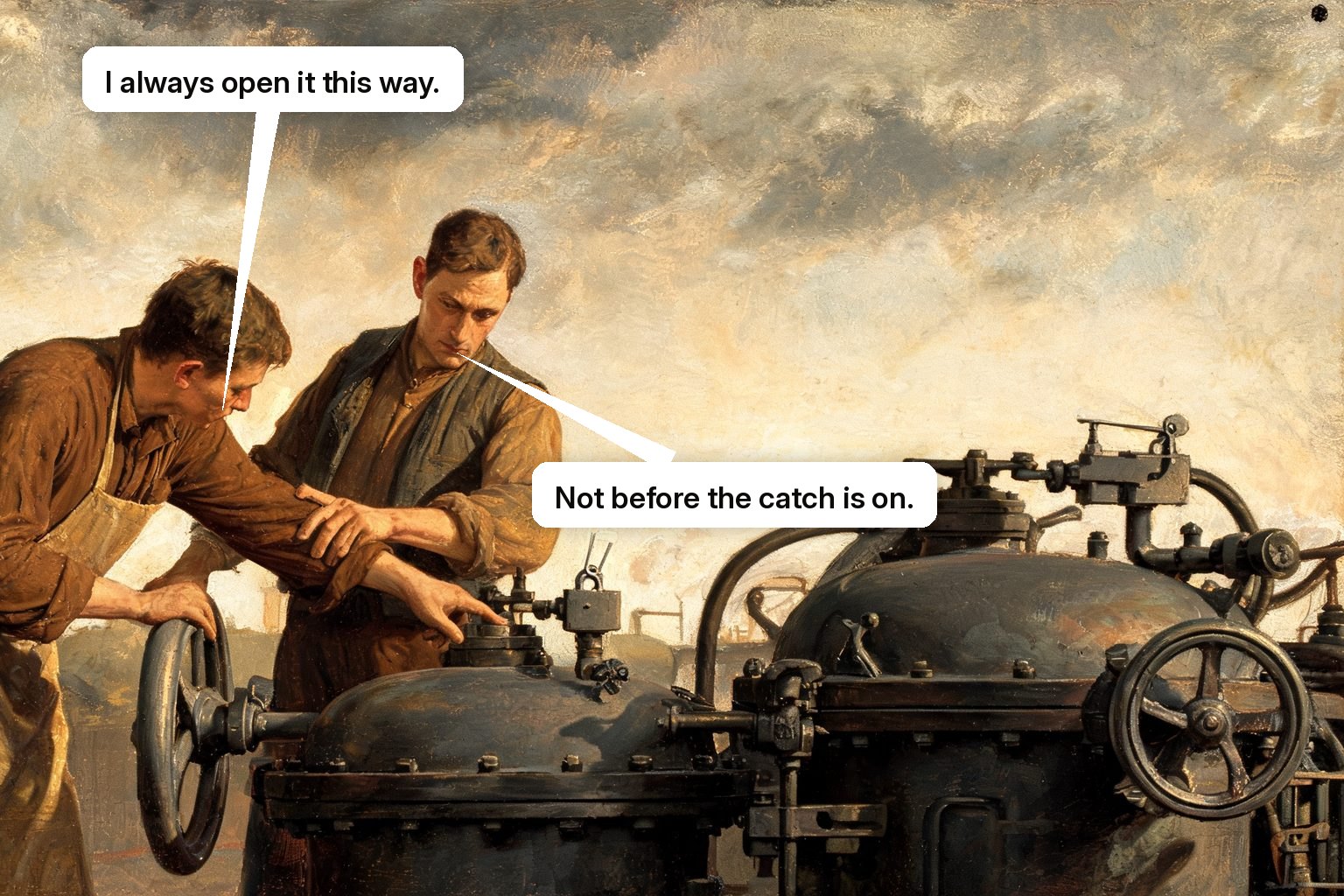
Take a returns process, an approvals chain, or a data-handling procedure. A live training agent teaches it in the system of record itself: demonstrates the compliant path on the employee's own screen, with the reasons attached to the steps that have reasons ("this field is what the auditor reads"), then supervises a practice run on a realistic case, including the exception paths, the escalation, the case that must never be shortcut. The employee's first unsupervised execution isn't their first execution. And because the training agent works where the process runs, updates to the process become updates to the training, the same week, not the next annual cycle.
Evidence auditors can actually use
The verification artifact changes species: from "completed the module on March 3rd" to an evidenced performance record, this person executed this procedure, on this class of case, unassisted, on this date, with the specific gaps named and remediated. For internal quality, that's a stronger signal on every axis. For regulated contexts, one caution belongs in every plan: map your specific regulatory requirements with your compliance team before replacing mandated formats, some regimes prescribe the form of training and records, and the evidenced record then supplements rather than substitutes. Multilingual teams get a quiet equity gain too: process training in the employee's own language removes the comprehension gap that quizzes in a second language paper over.
Rolling it out without theater
Pick the one process where drift visibly costs you, the one behind repeat incidents, rework, or audit findings. Define the compliant path with the people who run it best, train one team in-tool, and compare drift markers (exceptions, rework, escalations) against the course-trained baseline. (Disclosure: this is Skippr's Skippr AI training applied to process work, sessions and practice in the tools themselves, with the record to show for it.)
Questions buyers actually ask
Does in-tool training satisfy compliance requirements?
Often it strengthens the file, evidenced performance beats attendance logs, but requirements vary by regime. Map specifics with your compliance team before replacing any mandated format.
What about processes spanning several tools?
That's the normal case, and it's where in-tool training matters most: the agent walks the process across the actual systems, handoffs included, instead of teaching each tool in isolation.
Watch it train someone
Completion is not competence, and the difference shows up in the product rather than the dashboard. Fifteen minutes is enough to tell them apart.